Showing posts with label Radiology. Show all posts

Wednesday, May 26, 2010

Is Cloud Computing Annoying?

Ms. PACS: Has anyone seen him? The PACSman I mean. I filed a missing person's report, posted his face on a milk carton, but still no sign of him.

Of course, he must be moonlighting on some other blog. I don't mind being cheated on, as long as you're honest about it (oxymoron?).

Well the only thing more frustrating about him running off with another blogger is the pretentious attitude of IT "geeks" (they love to be called that) when you talk to them about cloud computing. They act like you are so behind the times, or just a moron, because cloud computing has been around for awhile. Didn't you know?

Even when you say you realize Amazon, Google and Facebook, which you've been using for years now, are clouds (because someone recently tipped you off), you're still scoffed at. But for you PACS admins, what business are you in anyway? This is health care. It's always been a decade behind the consumer curve when it comes to IT. Blame it on incentives; compared to consumer markets, there is less in health care.

Let's face it, much of the PACS user interface is a rip off of Adobe Photoshop anyway. How's that for being an early adopter?

Besides, cloud computing may be yesterday's news amongst IT geeks, but it is still relatively new to PACS and even advanced visualization for medical imaging. Ergo, it is relevant in radiology today. And should be in radiation oncology where image volumes are going through the roof. But who knows when the RT image management systems will catch on. And when it does in 2020...it will be relevant too. So lose the attitude.

Speaking of lost, have you seen the PACSman?

What about cloud economics.
The adoption of cloud-based architecture is assured if it benefits hospitals financially. This makes it very relevant.

A cloud environment enables ubiquitous access to programs, reduces the dependence on the users’ bandwidth and computer power and eliminates the danger of obsolescence.
This may be a scary step, but it would enable hospitals to share infrastructure with systems linked together. This would reduce cost, plus force interoperability, which is still lacking today.

Another benefit, you don't have to pay up-front costs for apps if it offers pay-per-use pricing. You don't have to upgrade your PC. You don't have to upgrade your hardware or networks.

If you don't like a vendor, you can easily switch - once there are enough cloud-based apps to choose from in health care. Another bonus is there is less of a threat of obsolescence because data centers and on-site technology can be continuously maintained and upgraded. That also removes barriers for vendors, allowing for more start-up Web services and more competition, which tends to favor the end-user.

It kicks in speed too. The cloud leverages available bandwidth and local computing power to optimize performance and speed. So now radiologist may be able to work faster and process more of those exams. That's what radiologists want - to be able to read more exams and make up for reimbursement cuts. Or is that the administrators' agenda?

Let's look to the cloud icons, and trend setters in IT. The Google's App Engine will let you run whatever program you want - as long as you specify it in a limited version of Python and use Google's database. I can run everyday programs like Word and Excel on Google and store it all right there. But you can't save your document to a folder, and you can't start a new document in a folder. That's REALLY annoying. We suspect Google is trying to rid users of the concept of folders. But then how do you organize things? Through search? What if I can't remember the name of the doc? SOL?

Sorry to be annoying, but cloud computing is not just trendy, it is relevant in health care and will change how you use your PACS - it will now be a service you access online. Talk about disruptive technology - I guess that's annoying too.

Tuesday, May 11, 2010

Top 10…or 19 PACS Problems


PACSman: I love how I’m given a list of the "Top 10 PACS Issues" to comment on, and it’s 19 items long. Mars and Venus says it all, if it wasn’t a list drawn up by a guy. Although, maybe Ms. PACS translated it into 19, adding her own stuff that isn’t in bold, which makes more sense. Who knows.

Here are the Top 10 PACS Issues, according to Richard (Skip) L. Kennedy, MSc, CIIP; Kaiser Permanente Medical Group, Sacramento, that will be discussed at the SIIM 2010 educational session on Thursday, June 3, 2010 in the "Practical Imaging Informatics Learning Track.”

  1. “It doesn’t go through…” Part 1: Network layer issues
  2. “It doesn’t go through…” Part 2: DICOM layer issues
  3. “It doesn’t do what I want/need/expect…”:
  4. -Managing user expectations and user education
  5. -Vendor feature requests and customizations
  6. “It’s really slow…”:
  7. -Performance management
  8. -Scaling issues
  9. “That can’t be right…”: Data QA management
  10. “Everybody wants on board now…”: Imaging content outside of Radiology (Cardiology, Dermatology, etc.)
  11. “You didn’t tell us about…”: User community communications and change management
  12. “We need to get a new…”:
  13. -PACS-to-PACS migration issues
  14. -PACS hardware refresh issues
  15. “We need to know…”: Dashboards and reporting issues with PACS
  16. “What to do when the lights are out…”:
  17. -Availability and uptime
  18. -Downtime processes and procedures
  19. -Disaster recovery
About 3/4 of the items on the list are technical issues. For the most part, those are a piece of cake to deal with. While they may not be solvable right away, they are solvable nonetheless. The other issues aren’t so easy.

My #1 is managing user expectations and user education. Will PACS solve every problem you have and meet every need? No. Will there be no downtime? No. Will it…the list goes on and on, and the answer typically remains the same - No. It’s even worse when you are replacing a PACS, expecting the new one to do things the old one didn’t do while you use the same RFP and get the same answers from the same vendors and expect the outcome to be different. Isn’t that the classical definition of insanity?

My #2 would be creating a vendor neutral system or at least incorporating a vendor neutral archive (VNA).  Despite 20 years of standards development, the vast majority of systems out there can still be considered proprietary or closed systems, each having at least one component from the database structure to the archive that locks in the end user. That is just plain sad. Vendors say they support a standard - all images are in a DICOM Part X format, for example, then they throw on a proprietary compression algorithm that only they provide. So much for an open system .

My #3 would be making sure the system is designed right. That didn’t even make the list. When you buy a PACS you buy what the vendor says is the solution based on your needs. The question remains: did you adequately outline ALL of your needs and did their solution meet it? This is easily addressed contractually, but few people include the proper contract language to address this.

My #4 would be…..well, you get the gist of it…problems are just masked opportunities for improvement. If you address #1, everything else is a piece of cake, but it’s like marriage - you never know what you are in for until you are in it so…Maybe that’s my #4. Once you make a decision to implement a PACS vendor, accept what you have and make the best of it. You are going to have it for a while, and getting out of it isn’t easy or cheap either. The upside of a PACS is that you get to choose a new one every 5-7 years without penalty.  If life were only that simple


Wednesday, April 14, 2010

Merge/Amicas Deal: Place Your Bets

Ms. PACS: It's time to place your bets ladies and gentlemen.

The odds were in favor of Merge pulling off a $248 million acquisition of Amicas when it issued a statement guaranteeing it could back the offer. Morgan Stanley even put its good name behind the deal. But let's face it, this Merge/Amicas merger keeps dragging out...although it has provided hours of fun for the PACSman...and its getting a bit messy.

According to the PACSman, "They raised $40M from 14 investors on the 2nd then came out with another $200M offering on the 6th." This would prompt anyone to wonder if their loan from Morgan Stanley has fallen through. Or are there some existing conditions in the loan, forcing Merge to raise capital from other investors?

They say, never let them see you sweat, but it's pretty hard not to in a pickle like this one. So, if you don't mind a little sweat, and want to enjoy this as much as the PACSman does, then let's play a favorite game of mine, Texas Holdem Poker.

Get ready to place your bets.

Lets look to an impartial party, Moody's Investors Service. Moody's recently demoted its rating of Merge Healthcare Inc. slightly to a B2 corporate family rating. Why did Moody's drop it five notches below its previous investment grade? Risk. Moody's said, in a nice way, it was due to "Merge's small scale, integration risk, and risk that it could continue to pursue growth through acquisitions are behind the rating."

Place your bets...

But there was a tone of optimism. Moody's said, "We believe, however, that if the Amicas acquisition is well-executed, there could be substantial opportunity for cost synergies..."

Place your bets...

"...And the combined company to generate strong free cash flow. Another beam of hope.

Place your bets...

But Merge is a "relatively niche player" in an industry dominated by large imaging equipment vendors and IT companies.

Place your bets...

Plus, it relies heavily on radiology.

Place your bets...

In the meantime, while the company figures out how to diversify its consumer base, the $35 million to $40 million it will get following the acquisition's close will provide "adequate cash" over the next year. Whew.

Place your bets...

Wait, one more thing, it’s lacking a “revolving credit facility,” which apparently could lead to the depletion of its cash reserves.

Now, show your cards

And you wonder what really happens on Wall Street.

Tuesday, April 6, 2010

Beware of Ninjas

Ms. PACS: It seems like everyone wants to be a black belt these days. Just go to Ballys Total Fitness, all you need to have is a bank account and a pulse to move up in the ranks.

And while the ‘fitness’ business has sadly denigrated the art and the term black belt, business management has upgraded it to guru status -- as a rank for experts in Lean Six Sigma management methodology.

I get it, it’s sounds more Ninja than just a boring old MBA. And now it is being adopted in PACS. Yes, radiologists can qualify for Ninja status too.

One of the big adopters of Six Sigma is applying its industrial methodology to radiology workflow. The company is spearheading a study to improve radiology productivity by finding where they can enhance PACS. I know about this because I included it an article in ITN’s April issue: Best Practices in Radiology Workflow.

The goal of the project is “to understand the exact work efforts of a radiologist and make changes to products/solutions to take the wasted effort away through better software and/or configuration.” The company enlisted its team of Lean Six Sigma Black Belts (LSSBB) to watch radiologist, actually timing them with a stop watch, to analyze the workflow process. The plan is to then apply industrial engineering techniques combined with Lean Six Sigma methodology to the radiology workflow. Finally, the Black Belts’ is to find opportunities to reduce wait time, excessive mouse clicks, redundant actions, and repetitious movements. The idea is to help radiologists make a leap to increased efficiency - Hiyaa!

I like the theory, but would karate chop my boss if he stood over me with a stop watch.

But there is a colony of Power Rangers out there in the making. The other day, this guy who runs a marketing company called Power…something asked on a certain networking site: “How can the Radiology industry use Lean Six Sigma? I am looking to market my LSSBB to a greater extent. Any suggestions?”
There were suggestions. One that stood out was: “The January 2010 issue Vol 65, Iss 1 of the ACR bulletin may be a good place to start.”

I googled and i found: “Get your black belt in ACR MRI accreditation.” So the ACR has Ninjas too. In fact, a number of different organizations in the U.S., Canada and the UK are applying Lean/Six Sigma concepts to help improve efficiency, utilization, productivity, cost containment, etc. Between decreasing reimbursement rates, increasing imaging volumes, shortage of radiologists, etc. there is certainly growing interest in finding new ways to streamline and improve the delivery of imaging.

According to another Radrounds participant: "While there is a lot of info on the web about Radiology process improvement, key performance indicators (KPIs), etc – there seems to be a technical gap in terms of how people are able to analyze results/performance." He said he is working on a new solution to take data from any source, combine it into useful perspectives, and help organizations to improve workflow, reduce costs, increase utilization, patient volumes, etc.

Those are some useful tips, but is it just more pseudo black belt speak?

One thing is for sure: everyone thinks it’s cool to be a “black belt.” And, every field has one - whether it's radiology, the music industry, or its the originator of Lean Management itself -- Toyota -- but look how that turned out. The term “black belt” is a business buzzword. What the heck, Ballys Total Fitness runs a “black belt” mill.

For those who actually want to know, the real black belt is only the very beginning stage of becoming a master in either karate or tae kwon do or judo. It takes many, many years to move up the ranks and to understand it. That leaves just a few real Ninjas in the world - those who understand the real meaning of the belt (that does not include Yoda). So shhh...keep the secret. Kamsamida.

I wonder how long it will take to get a black belt in PACS? Anyone know?

Thursday, March 11, 2010

PACS Divorce Rate Spikes!

PACSman: So why aren’t second PACS purchases flawless? One only needs to look at marriage and divorce statistics to understand. It is pretty much agreed by most experts that first marriages end in divorce about 40 to 50 percent of the time. The PACS “divorce rate” is much higher than that.

What surprises me is that the divorce rate increases with second marriages to 60 percent and more, while third marriages end in divorce at least 70 percent of the time. Does that mean third generation PACS are more doomed than second?
One would think that an individual who has gone through a marriage and divorce would have “learned his (or her) lesson” and will, therefore, not repeat the mistakes of the past. Alas, this is often not the case. Those who marry to fulfill certain needs, but are not prepared to give in return, usually marry with the same intent the next time around.
The same holds true with PACS. The second or replacement PACS becomes nothing more than a walk down a precipice, a courtship leading to fresh disaster, only because it involves a new partner.

Avoid Disaster
So how do you avoid the disaster? Make a list of what you liked and didn’t like with your first PACS. Evaluate your new PACS partner not just by the freshness they bring to the relationship but by how well they performed during the time you were together.
In doing the detailed evaluation and assessment, it is important to understand that while newer systems might perform better – after all it does run on newer hardware and is one of the primary reasons why you are upgrading – you have to also ask if the better performance helps you or hinders you? That may sound contradictory, but sometimes faster and cheaper isn’t always what you need, especially if you lose a feature you really used before.
Look at the company’s track record in delivering what they promised relative to software updates and upgrades. Did they meet the promised delivery dates? Did it work right the first time? Did it include everything that they said it would or merely provided a fraction of what they said?

Get the Top 10 Considerations for PACS Replacement here and read the complete article in the April issue of Imaging Technology News

Saturday, March 6, 2010

AMICAS Opts for the Bigger Diamond

Ms PACS: I'm sure you've heard the expression: "A woman has the right to change her mind." That's just how we women explain our whimsical nature or, simply, our indifference when blowing someone off. Fact is, it's good to have options. Besides, who can resist the ego-trip of having several suitors making you offers. Sure, you probably know the one you're going to say yes to, the one who offers the biggest diamond ring, but you keep the other ones on the back burner, just in case.

On March 5, 2010, Merge had the pleasure of announcing: "AMICAS Agrees to Merge Acquisition Offer for $248 Million." Actually, it sounds like the release came from AMICAS. But whichever, the deal was sealed after AMICAS wavered between an initial offer from Thoma Bravo for $5.35 per share, and an offer from Merge for $6.05 per share, and entered into a definitive merger agreement (the “Merge Acquisition Agreement”) in which Merge will acquire all of the outstanding shares of AMICAS for $6.05 per share in cash, or an aggregate of $248 million.

As you all know, AMICAS had rejected Merge's offer of $6.05 per share and urged shareholders to support a rival offer of $5.35 per share, or $217 million, from Thoma Bravo, which AMICAS had agreed to in Dec. But on Monday AMICAS said it considered the Merge offer superior.

Finally, the Board of Directors of AMICAS unanimously voted to terminate its previous deal with Thoma Bravo and to enter into the "Merge Acquisition Agreement." Merge pulled the old "get her a bigger diamond and she'll say yes" trick - 13 percent bigger - and it worked.

Together, AMICAS and Merge aim to become "a leading global healthcare IT provider" with a combined portfolio of solutions for cardiology radiology, management solutions for IDN’s, OEM solutions for pharmaceutical, biotechnology, medical devices....yada yada yada.

Now, everyone's asking, just like with Branjolina (Brad and Anjolina), will it last?

PACSMan: I believe the words for that are gold digger...And now you know why I am a confirmed batchelor....Thanks, but no thanks...

Sunday, February 7, 2010

Setting the Record Straight

PACSman: It took about three to four days before the calls started coming. “We aren’t very pleased with Mr. Cannavo’s comments about us.” The calls started and the plotting began. You- get the wooden stake. You- find the right mallet. And you- find a hit man who can do a job on the Anti-Christ here. And through it all, including the inevitable call from Ms. P. asking me what she should tell those asking questions about this posting, all I could think about was that silly early 80’s movie Stripes. You know the one, with Bill Murray, Harold Ramis, John Candy, et.al. and that memorable scene between Psycho and Sgt. Hulka.

Psycho:
The name's Francis Soyer, but everybody calls me Psycho. Any of you guys call me Francis, and I'll kill you.
Leon: Ooooooh.
Psycho: You just made the list, buddy. And I don't like nobody touching my stuff. So just keep your meat-hooks off. If I catch any of you guys in my stuff, I'll kill you. Also, I don't like nobody touching me. Now, any of you homos touch me, and I'll kill you.
Sergeant Hulka:
Lighten up, Francis.

So to those who see me as the Anti-Christ because I dare make suggestions about (OMG! Gasp!!)change I offer these three words - “Lighten up, Francis.”

Before I submitted what I wrote I read, re-read and re-read my reread to make sure I put as positive a spin on things as I could. This is a blog site and not a journal page. So why the uproar? Got me, but if I were a betting man I would say that people are just way too sensitive about ANY press that isn’t Pollyanna sugar-coated positive.

The powers that be need to go back a re-read this blog posting again. Sure I talked about numbers and how most focus on quantity over quality (which when you get to be my age is not an important feature) and said “Most shows promote quantity over quantity. Why they do this is anyone’s guess because it is simply wrong. As one vendor told me: “I’d rather have 10 qualified leads that 1,000 whom I have to educate from the start.” Is saying that certain trade shows don’t market themselves properly considered wrong? Mea culpa then…but I did say how you need to market instead and even cited an example from a vendor friend of mine (and yes, I do have a few remaining in this industry). I also ended this on a positive note as well: “For the most part the RSNA has proven to be a very good show for most PACS vendors despite the costs and numbers game being played.” Maybe had I said “all” instead of “most” it would have gone over better. Ya think?

This isn’t the first time I’ve given HIMSS a spanking for ignoring PACS and won’t be the last either. Frankly I’m at a loss on how radiology can get HIMSS’ attention. If I thought that putting the leadership of HIMSS through a session with Mistress Margo in the Dungeon of Doom with her black whip and high heeled boots would do it, I’d pop for the expense, but somehow that doesn’t seem like the answer - or maybe it is. All I know is while several PACS companies have discussed not going to HIMSS or at least scaling back their presence, few are willing to take that chance because at HIMSS they can actually get the IT managers’ attention. Why? Read again..."The dynamics of the PACS decision making has significantly changed in the past few years. Where radiology departments once stood apart from other clinical systems and with them the way decisions surrounding the vendor of choice were made, now nearly half (and in some cases more) of the final decision on the PACS vendor of choice falls to the IT department. And where does IT go to gets its information? Largely from HIMSS...". Now just being at HIMSS and getting IT managers’ attention are two entirely separate animals, but as Woody Alan once said, “80% of success is just showing up.” I’m sure even the most challenged marketing departments can figure out how to make up the remaining 20%, but if not, give me a call and I’ll show you how. And for the record, I did give HIMSS a pat on the back while I was kicking them in the a$$ as well, saying "Why not bring the trade show to the end user just as HIMSS is doing with its virtual conferences and expos?"

SIIM. What does the PACSMan possibly know about SIIM? Besides being one of the original members of SCAR way back when and active in it for several years back when Sam Dwyer (God bless his soul) and Ron Schilling and others were involved, absolutely nothing (laugh).

Now let’s set the record straight - I like SIIM, I like the members in SIIM, and SIIM is the pre-eminent PACS organization in this market and I said as much too. SIIM has also made several strides in the past year to make its annual show a lot more end-user and vendor-friendly which I applaud. These include having 11 hours of unopposed time in the Exhibit Hall (not having this was a biggie with vendors in previous years), new roundtable discussions (which our illustrious Ms P was invited to be a part of), private demo rooms, a networking lounge and much more.

I never said that any of these shows sucked or wouldn’t survive. Never. The closest I came to implying or inferring there would even be change necessary was my comment "The question is not so much will trade shows survive but in what form and function?" Read it as it was intended. Yes, trade shows WILL survive but they need to adapt to these changing times. And unlike many who simply bitch about a problem without offering a solution, I offered several possible solutions as well. Read back. Those were obviously my thoughts and perspectives and people don’t have to agree with them. Truth be known some don't (but many do). That said the last time I checked there was just my mug and Miss P’s on the masthead and no one else’s. Anyone is free to express their feelings on in the comment section- it's open to all- or if you feel strongly enough make a post on your own web site. I'll visit it if I hear about it and may even comment on it too. After all this is America and she is a berry good country allowing things like free speech.

So to all those who want to kill the messenger instead of listening to the message I offer yet more insight from Stripes. Substitute the word Army for PACS or Imaging and you get the idea. We are all different and all share the same visions - we just have different ideas of how to get there.

John Winger:
Cut it out! Cut it out! Cut it out! The hell's the matter with you? Stupid! We're all very different people. We're not Watusi. We're not Spartans. We're Americans, with a capital 'A', huh? You know what that means? Do ya? That means that our forefathers were kicked out of every decent country in the world. We are the wretched refuse. We're the underdog. We're mutts! Here's proof: his nose is cold! But there's no animal that's more faithful, that's more loyal, more lovable than the mutt. Who saw "Old Yeller?" Who cried when Old Yeller got shot at the end?
[raises his hand]
John Winger: *sarcastically* Nobody cried when Old Yeller got shot? I'm sure.
[hands are reluctantly raised]
John Winger: I cried my eyes out. So we're all dogfaces, we're all very, very different, but there is one thing that we all have in common: we were all stupid enough to enlist in the Army. We're mutants. There's something wrong with us, something very, very wrong with us. Something seriously wrong with us - we're soldiers. But we're American soldiers! We've been kicking ass for 200 years! We're 10 and 1! Now we don't have to worry about whether or not we practiced. We don't have to worry about whether Captain Stillman wants to have us hung. All we have to do is to be the great American fighting soldier that is inside each one of us. Now do what I do, and say what I say. And make me proud.

Monday, January 25, 2010

Wii Takes the Controls from PACS

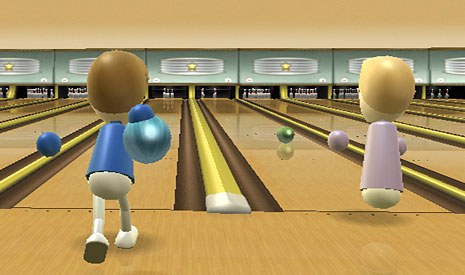
Ms. PACS: Wii may have just made it's way into medical imaging - in particular PACS. Now you can use Wii for more than just virtual bowling, tennis or any other Wii sport. The Wiimote lets you zoom, pan, scroll, and more, remotely.

The Wii remote is interfaced with GlovePIE, allowing the end user to interface with images, scroll through a CT volume data set. GlovePIE is a program that lets you turn a Wii Remote into a mouse, joystick, or even script it for unique functions in games and software.

The developer says this is where Radiology reads a case in a “Minority Report" kind of way. Check out the video demo. The developer says, "This is a simple example of me interfacing for window/level, zoom, pan & slice scrolling features on a CT set of images."

Maybe you can be a WiiPACS beta site! According to the developer, he says, "I’m open to suggestions!”

Monday, December 28, 2009

AMICAS Sale Goes Round and Round

Ms. PACS: Did you hear the news today: AMICAS has entered into a definitive agreement with an affiliate of Thoma Bravo LLC to be acquired for $217 million in cash.

This is good news for AMICAS' board since the company shelled out $39 million for Emageon Inc. this year. Time to recoup some of the green. But what does it mean for the PACS industry?

Not sure yet, but Stephen Kahane, AMICAS' chairman and chief executive, says it's great, but for whom? Kahane said the buyout will give AMICAS the "additional capital and operational expertise" that it badly needs to grow. The cash injection should help, especially after AMICAS shares hit a seven-year low late last year, reported WSJ.com. Actually, AMICAS stocks have grown steadily in 2009 thanks to rising sales and expectations. Again, what does it mean for the ailing PACS industry? Perhaps, what goes up must come down, and go up again?

Not so fast. Just 40 minutes ago, a New York law firm, Stull, Stull & Brody, opened an investigation on behalf of AMICAS shareholders over the price to be paid to AMICAS shareholders. And, they are also questioning whether AMICAS' board of directors breached its fiduciary duties to the shareholders by agreeing to sell the company at an unfair price. According to the firm: "Whereas AMICAS’ shareholders would receive $5.35 per share in cash under the terms of the proposed transaction, at least one analyst has set a price target of $6.00 per AMICAS share, representing a substantial potential discount to Thoma Bravo, LLC."

So is this something AMICAS' board should be concerned with? Only if they don't have leech powder to burn these guys off their ankles. This is just "Attorney advertising," looking for people to join a class action suit on behalf of the stockholders. It is no more than a bunch of leeches looking for a host. Every time a pending sale is made almost without exception they come out of the woodwork. Scratch your leg and another one comes up - this time its Levi & Korsinsky - making the same claim, pretty unoriginal.


PACSman: AMICAS was sold to Thoma Bravo, LLC, a private equity firm who wants to put money into a sure thing and bring the company private and out of the public eye. That, in my opinion is great news. AMICAS is also now subject a class action suits from at least two firms in the past 12 hours claiming that the stock was undervalued and someone was playing games with the stock price. That, in my opinion, is old news…Yogi Berra was right- “It’s déjà vu all over again!”

Every company who has offered stock has to deal with these legal vultures trying to make a buck for themselves. This is the latest deal:
The current investigation concerns the price to be paid to Amicas’ shareholders and the process by which Amicas’ Board of Directors is addressing the transaction, including whether the Company’s Board of Directors breached its fiduciary duties to the Company’s shareholders by agreeing to sell the Company at an unfair price.

AMICAS had to deal with this very same thing back in April, 2009 when it acquired Emageon:
The action…..alleged, among other things, that the members of the Emageon Board of Directors violated their fiduciary duties by failing to maximize value for Emageon's shareholders when negotiating and entering into the Agreement and Plan of Merger dated as of February 23, 2009 among Emageon, AMICAS and a subsidiary of AMICAS. The complaint alleged that AMICAS aided and abetted those purported breaches.


In one statement they purportedly "breached its fiduciary duties to the Company’s shareholders by agreeing to sell the Company at an unfair price" while in the other "they violated their fiduciary duties by failing to maximize value for Emageon's shareholders. Other than the words used, as Led Zeppelin once sang, the song remains the same…"

So who wins? Did the stockholders get what they wanted? No. Did the vultures get what they wanted? Yes - at least for them..

Here is part of the release from Health Imaging magazine:
On March 27, Emageon said that it and the other named defendants in a putative class action lawsuit filed by its shareholders on March 13, in connection with the proposed acquisition of Emageon by Amicas, have entered into a memorandum of understanding with counsel for the plaintiff.
Under the terms of the memorandum, the parties have agreed to settle the lawsuit, subject to court approval, at which time the lawsuit will be dismissed with prejudice. Emageon and the other defendants maintain that the lawsuit is "completely without merit." Nevertheless, to avoid costly litigation and eliminate the risk of any delay to the closing of the tender offer and subsequent merger, the defendants have agreed to the settlement contemplated in the memorandum, according to Emageon.
Source: http://www.healthimaging.com/index.php?option=com_articles&view=article&id=17000:emageon-acquired-by-amicas-settles-shareholder-suit


Now this is the part I don’t like: Nevertheless, to avoid costly litigation and eliminate the risk of any delay to the closing of the tender offer and subsequent merger, the defendants have agreed to the settlement contemplated in the memorandum, according to Emageon. Score: Vultures- 1, Stockholders- 0, AMICAS- ?

Take a look at how AMICAS stock has done over the past five years. Five years ago, on December 27, 2004 AMICAS stock traded at $4.45. It got as high as $5.54 on August 29, 2005 and never broke $5.00 a share after the week of February 6, 2006. From February 2006 to December 2009 is almost four years, for those who are mathematically challenged.

From May, 2006 to September, 2008 AMICAS stock hovered in the high $2’s to mid $3’s, with the stock taking a significant hit in the 3rd quarter of ’08, closing at $1.89 share on December 28, 2008. Again, for those who are mathematically challenged that was just 12 months ago or one whole year, whichever you prefer.

Due to some incredibly wise investments made by AMICAS corporate management as well as solid sales made by the AMICAS sales force in an incredibly challenging economy AMICAS stock closed on 12/24/09 at $4.42/share, a 177% increase in the stock price over the course of past 12 months. Thoma Bravo offered $5.35/share for the stock, a 21% premium over the closing share on the day the deal closed.

The vultures say that “The offer price is only a small premium over the $4.84 price the Company's shares traded at as recently as December 8, 2009 and below a $6.00 per share price target set by at least one analyst.” Now break down the word analyst into two words- one four and one three letter - and you’ll have a better understanding of what exactly is going on here. These “anal-ysts” are truly clueless about this market. Why not just claim that AMICAS was worth the $34.44 it traded at nine years ago on 11/24/2000 even though less than three years prior to then (on 9/8/1997) their stock only traded at $2.22? Gee, back in 1989 I weighed 125 lbs…Today I weigh…um…a bit more. Does that make me worth twice as much since I am almost twice the person I was then? No. Again, these people are completely clueless.

This is the exact same anal-yst mentality that has allowed Merge’s stock to get pumped up from $0.41/share on 11/25/2008 to a high of $4.67 of 7/7/2009. Again for those who are calendarly challenged that is over a ten-fold increase in stock price IN JUST EIGHT MONTHS. Merge has “settled back” into the low threes which is where they probably will stay until- God help us all- someone steps up and buys them as well. Of course the vultures will then say that Merge stock was undervalued too since Merge traded at $28.72 as recently as 11/28/2005, just four short years ago. Of course there was this little accounting irregularity they have dealt with since then but…why are we dwelling on minor details like that (laugh)?

The bottom line is Bravo saw a good thing and bought AMICAS, to which I say, well, bravo!! They offered a fair price, which AMICAS management smartly took. It’s good for AMICAS, and it’s good for the marketplace.

And the vultures? They always have and always will come out of the woodwork, especially since they stand to make money through something the do best - intimidation. As they have in the past AMICAS will no doubt pay, the vultures will fatten their wallets, pump up their chests and give those foolish enough to sign up for the class action suit $.03, $.06 or whatever a share, if that, and pocket the rest. I chose to ignore them and frankly you probably should too.

Celebrate that a private equity firm would chose to invest in AMICAS and keep them as they are. This is a far better alternative than the company being bought by a major PACS vendor who no doubt would totally screw up a good thing as so many before have experienced (cough - DI - cough).

Lastly, a personal note to the vultures. If you are going to show that you have the coglioni (as we Italians like to say), to sue on behalf of others, at least get the name of the company whom you are suing right. It’s AMICAS, Inc.- upper case A through S, little Inc., not – “Amicas, Inc. (“Amicas” or the “Company”) (Nasdaq: AMCS).”.


Now sing a little Zeppelin along with me:

I had a dream. Crazy dream.
Anything I wanted to know, any place I needed to go

Hear my song. People won't you listen now? Sing along.
You don't know what you're missing now.
Any little song that you know
Everything that's small has to grow.
And it has to grow!

California sunlight, sweet Calcutta rain
Honolulu starbright - the song remains the same.

Sing out Hare Hare, dance the Hoochie Koo.
City lights are oh so bright, as we go sliding... sliding... sliding through.

Tuesday, December 22, 2009

A Different Time and Place

PACSMan: I love it when my kids ask me what my computer was like growing up. I show them a pencil. They ask about my cell phone. I told them the networks back then were very, very primitive, with our “Internet” back then known as MVR- the mom voice relay. My mom would open the door and yell for me. Another mom would hear it and relay it to yet another mom, and if you were half a mile away, you would know within 20 seconds that it was time to come home. Best of all, it was free and you never dropped a call either. Of course our town had at best 8,000 people, most of whom knew each other, and was only a mile square from end to end, but still...

It was such a simpler time. When there was a home game on Saturdays around noon the band would march through the heart of town from the high school, down Maple Avenue and over to the football fields. You’d hear them and know...The civil defense siren would test itself every Saturday as well, at 11:55, and when there was a fire our volunteers knew where to go because the system they used based on siren taps told you which intersection it was at. So where am I going with this….Oh yes, the holidays…

Back then we too had Salvation Army bell ringers, but they were actual members of the Salvation Army, and did it because they believed in collecting to help the poor, not because it was a paid position like it is today. They NEVER EVER sat down and EVERYONE was there always smiling and ringing the bells in their neatly pressed Salvation Army uniforms, not just an apron over blue jeans. Often times there would be 2-3 musicians with them, playing songs or singers singing next to the kettles as well - as the snow drifted down all around us. I tell my kids this and they look at me like I am crazy or have been looking at too many Norman Rockwell paintings…but that was the way it was...a different time and a different place…

Now I’ve seen more shrinks in my life that any six people combined - mostly for my own edification in trying to be the better person that I truly need to be - yet a large part of my childhood memories have stayed locked up behind walls that as one counselor put it “made the Great Wall of China look like a picket fence.” I remembered very, very little of my life before age 12…until recently that is...when the wall suddenly developed a leak. I have no idea what has caused this sudden flood of memories to come back, but they have. At first it scared the living hell out of me, but now it’s almost calming in its own way.

The other night in one dream I was back in kindergarten, age 6, and all the kids through 5th grade and their parents were in the playground at Oakland Street School. Dee Dee, the janitor, had moved the piano outside and Miss Broadmeyer led everyone - kids and parents alike - in singing Christmas carols as a light snow fell upon us. In my dream, I could even feel the cold air, even though mom bundled me up real well (we always walked to school, even that night). I could even taste the snowflakes on my tongue… What’s funny is everyone in the dream sang together and everyone wished each other a Merry Christmas. If there was a Jewish family or Indian family there (admittedly not that many in my white bread town of Red Bank though), we wished them happy holidays and they sang along. We didn’t need the government telling us we had to desegregate because everyone of every color and every creed all sang carols together and ate homemade cookies (I don’t think the stores even offered store made ones back then), while the milkman (yes, we had one of those too) supplied all the milk for free - poured from glass bottles. Some were Christmas carols, some Jewish songs (in the dream I recall singing “I have a little dreidel” so it musta been Jewish - and this was well before I knew the Dalai too), but all the songs had all one thing in common - they were happy songs sung by happy people. No one from the ACLU was there to monitor us because….well they probably would have been kicked out if they had been.

Political correctness? What was that? We even hugged and kissed our teachers, and they hugged and kissed us back. They truly LOVED us, and we them. There was no such thing as sexual harassment back then either…

There were no in-school or out-of-school suspensions. If the teacher called your house, you were in serious deepness. Guilty until proven innocent. Unlike our Southern counterparts, our teachers weren’t allowed to hit you - spanking was outlawed in the North by then - but it probably would have been less painful if they had. One call to home and mom and dad would be all over my case and my…... If they had a DCF back then, they too would probably join the hit force as well.

The cops never arrested you when you did something stupid because they all knew your parents and knew that it would be much better if your parents addressed it at home than through the system. So in the car you went - scared um….to death what would happen as they talked in hushed tones, laughing on the inside, but so serious on the outside. Juvie was only for the really bad kids, and we were never bad kids, just stupid kids, or shall I say typical kids. Big difference. That is why it’s so hard for me to get mad at mine own kids for being stupid. I was stupid once…and many think I still am…or at least my kids feel that way. In another decade I may get smart again though…we’ll see.

Christmas Eve we always ate an Italian feast complete with pasta fritte (fried bread dough) and suppa de peche (seafood spaghetti sauce) and all sorts of goodies, including incredible pastries from Caputtos Italian Bakery in Long Branch. Any time you traveled a whopping 10 miles to get pastries you knew they had to be good. We never knew half of what we were eating at the time, but ate it anyway - and it was delicious. Whether at our house, Mr and Mrs T’s, an aunt or uncles house, friends - anywhere, everywhere - we’d eat and eat and eat and laugh until it was time to go to midnight mass - and a high mass at that. That was another night’s dream as well - Christmas Eve - complete with midnight mass, the songs in both Italian and Latin, the incense, the stations of the Cross, and me there, sometimes in the audience, sometimes serving as an altar boy, although not until much later in life, since that was reserved for the “older” kids of 12 and up. In my dream I could actually smell the incense and hear the incense burner moving back and forth as we blessed the people.

As I looked around in my dream, I saw all our friends and neighbors - everyone knew everyone - and looked up in the balcony and saw my Aunt Mary singing with the choir- “Oh bambino mio divino…” There were maybe seats for 300 if that and the church was always packed on Christmas eve.

By comparison my kids go to my ex’s church that holds about 3,000 people and cost $46M to build, almost $10M of it on audio and video equipment alone. The worship team there consists almost totally of professional musicians – St. Anthony’s had parishioners with an average age of 67. I was proud putting my $1 in the collection basket Christmas Eve; at my kid’s church you feel like tipping the usher $20 for the magnificent Vegas-style production. Monsignor knew us all by name - my ex’s church only knows the top 1% of tithers and probably doesn’t even know half the church staff. I go to a much smaller church - maybe 600 people tops - and know most of the men and can call the pastor anytime, if I need him. That said, it’s just not the same as when I was growing up though.

The last time I was in St Anthony’s was a few years ago at my Aunt Mary’s funeral where I delivered her eulogy. Before then the last time I was there was at my dad’s funeral nearly 6 years ago and before then mom’s funeral almost two decades prior to then….Yes, I am an orphan….BUT thankfully my life doesn’t read like a Dickens novel or anywhere close…although Dad did have an Ebenezer Scrooge attitude about Christmas which I never fully understood until I was in my mid 40’s.

Even though I had been in the church just a few years before it had been over 40 years since I was last on the altar there. I just sorta froze for a moment as hundreds of memories came flashing back in rapid fire sequence. The altar always looked so much …bigger...and the priest so much more…imposing. We never had altar girls back then either - blasphemy!! - and never ever were we allowed to wear sneakers either - only polished black shoes. The church had changed immensely since I was a child - it didn’t even look the same - but I closed my eyes and could hear the songs, smell the incense, see everyone I knew…and then I had to speak. But I was speechless…my heart was broken at the loss not just of my dear Aunt Mary, but of my youth well….a time and a place that was so much better than the fast paced high tech world we live in today…

Christmas day was always reserved for relatives and friends. Like the miracle of the loaves and fishes wherever we were- our house or theirs- there was always a steady stream of people in and out- some whom we never knew who they were and it didn’t really matter either- there were never any strangers in the house at Christmas and we never ran out of food or wine either. And Uncle Louie, God love him, you’d put a bottle of Sambucca in front of him and the laughs would get louder and louder as the night progressed. God how I miss that all….

So if I happen to chat with you between now and the December 25th and wish you a Merry Christmas, please bear with me for not saying Happy Holidays instead. I’m just flashing back to much a simpler time and place, where the heart always goes at the holidays…

Have a blessed holiday season and, oh yes, Merry Christmas to you and yours!!….

PACSMan

Tuesday, December 15, 2009

3D is Not only Fun, It’s Coming to a PACS Near You

Ms. PACS: If you’re still hemming and hawing over the uneventful technologies on display at RSNA this year, then you definitely missed the fun at the Fuji booth. It was fun and funny to see radiologists ogling over a tomosynthesis viewer, while wearing 3D glasses on top of their own spectacles.

Does that mean 3D mammography plus 3D glasses adds up to 6D? I’m not sure, but they call it 3Dimensional Stereo Digital Mammography and the images definitely popped off the screen. Actually, they were viewing 3D images acquired from a full-field digital mammography system instead of individual slices displayed in 2D from 3D data sets. The idea is to see behind overlapping structures and read breast-imaging exams faster.

McKesson also featured a 3D monitor for viewing 3D clinical images - a heart beating in the air. If this type of visual enhancement proves to be useful for diagnostic accuracy, there may already be millions of radiologists in training – but most of them busy playing AVATAR.
AVATAR

Since, Mitsubishi made 3D video gaming a reality earlier this year with the release of Nvidia 3D technology on one of its 3D-enabled TVs, as well as on home entertainment PCs, with a souped up graphics card of course, software now creates 3D imagery from regular video games, and some day regular 3D volume data sets.

By the way, Avatar is a new video game that uses the same 3D technology as the James Cameron sci-fi movie, also called Avatar. Talk about back to the future, it’s like 3D at the movies in the 1950s when Hollywood was losing viewers to TV and released 3D flics to regain popularity. Hmmm...sounds like Hollywood today is banking on AVATAR to do the same.

Back to reality, in a study presented at RSNA 2009, and conducted at the Mayo Clinic in Rochester, Minn., researchers used 3D stereotactic surface projection (3D-SSP) software to improve accuracy in diagnosing Alzheimer’s disease. 3D-SSP has been used in some centers and is thought to improve the accuracy of experts, said Vance Lehman, M.D., lead author of the study, which included 54 patients (23 normal and 31 cognitively impaired individuals). Two readers with less than one year of experience and two nuclear medicine experts with at least 10 years of experience viewed and rated all the PET scans. The readers ranked the scans from 1 to 5, with 1 as a normal scan and 5 as severe dementia. They also evaluated the scans for diagnostic confidence, with 1 as uncertain diagnosis and 5 as complete diagnostic certainty. During the 3 to 3.5 years of patient follow-up, no one in the normal group developed cognitive impairment, which confirmed their initial diagnosis. To my knowledge, the images were not projected on 3D-enabled monitors nor were the clinicians wearing 3D glasses, but don’t be surprised if they do in a follow-up study.

Now that it’s looking more and more likely that 3D technology will soon be a common modality to view volumetric, live images in radiology rooms and in the ORs, maybe they should hand out free 3D glasses at next year’s RSNA – and win back some its popularity.

Note: On December 3, LG Display Co. of Seoul, Korea, rolled out, the world’s first commercial launch of 3D LCD panel boasting full HD resolution. The new 23-inch 3D monitor LCD panel is used with shutter glasses that deliver full HD resolution.

PACSman: Some women are easily impressed, and so too it seems to be with Ms P. and 3D. While tomosynthesis is a relatively new technology and has only been around 20 years or so, 3D has actually been around since 1922. Three D had its Golden Era in the mid 50’s, a revival in the 60’s and 70’s and went to a new dimension in the mid 80’s with IMAX film. Today many films can be found in 3D, including the latest from PIxar Studios, Up.

I’ve seen nearly every iteration of 3D imaginable, and while it’s really cool and does have its benefits in healthcare, the costs are still fairly substantial, even though they have dropped in recent years. Processing requirements also remain fairly intense as well. Reimbursement will largely determine whether 3D thrives or dies on the vine, but for now, like its film counterpart, medical 3D is enjoying a revival of sorts.

There was a lot shown at RSNA, but very little was what I consider earth shattering or that helped me justify the $1,500 it cost me to go this year. Unlike the vendors and even Miss P who works for a company, it all comes out of my pocket. Of course with the show being in Chicago Miss P also had the option of sleeping in her own bed at night and didn’t have to spend $225 a night to call some place home, so that’s yet another inequity I had to deal with.

3D really didn’t catch my attention anywhere near as much as it did Ms. P.’s , but then I am the world’s biggest cynic as well and focused mainly on PACS. What did catch my interest was the promotion of cloud-based solutions as an alternative to image distribution via the web… We’re still a few years out from making this a widespread reality and with it commensurate pricing, but the concept is still intriguing nonetheless. So why show it if its not real? RSNA - Real System Not Available. Next question. A few vendors are doing alpha and beta testing of their cloud solutions so within the next year or two these will become more and more real…

So what exactly does a cloud-based system do? Cloud-based systems allow multiple disparate systems to upload images and reports to a central data repository, or "cloud," and then resend them out to various clients from a single site. This is crucial in making a cardiologist, orthopedists or others’ job easier, especially since the clinician typically covers multiple hospitals. Instead of having to log into four, five or six disparate systems at various hospitals or deal with CD’s that all too often don’t work properly, they simply log into the cloud and viola - instant access to all their studies that have been downloaded for them. Of course, like everything, there is a cost associated with this that the hospital pays and currently that costs is quite high, but within a year or so once, these are more than a concept, then you’ll see prices drop.

There were the obvious improvements to PACS that every vendor made a big hoopla over. VNA’s all over the place, data migration services being offered by a host of vendors, and, of course, a number of Rajivs in Ramanathapuram’s Radiology Renderings, Inc. who offered teleradiology services at a price that my dog wouldn’t even touch.

Would I go to RSNA again? I feel the same way that vendors do - you have to go because if you don’t it raises more questions than not, and once you start you can’t stop even though each year its becoming harder and harder to justify the costs. Of course, over 100 vendors out of the 700 or so who displayed at RSNA 2008 didn’t show up at RSNA 2009 - so it does happen. I just can’t let it happen to me, especially since the PACSMan Awards are among the top five stories to come from the floor of the RSNA, and people look forward to a little levity in their lives. God knows we all need some after walking all over creation and back listening to so much bull I feel like I’m in Dallas instead of Chicago. But as I’ve grown to know after more than two decades of shows, it’s all a part of the game…and next year I may even get to see to see RSNA virtual - and in 3D!!

Monday, November 23, 2009

RSNA 5-Day Forecast


Ms. PACS: I was looking into my crystal ball, trying to see what to expect at RSNA 2009 next week, when I saw...a huge smudge - I needed Windex. So in my quest to seek out truth and wisdom, I turned on the TV. Clicked on the weather channel. To my surprise, standing in front of a large map, it was Willard Scott! I wondered if it was an old VCR recording…but realized it was in fact 2009. Maybe Willard’s 401K had taken a nosedive, forcing him out of retirement. In any case, despite his feeble yet rotund state, he did provide some sound data in his RSNA 5-Day Forecast.

Willard said: “You can expect to see:

1. Low res images sent from PACS to EMR: If you go to the BRIT Systems booth, you will see their new Webworks solution. Referring physicians and their patients now have access to diagnostic images with a new browser-based application for viewing patient images and reports on any computer with an Internet connection and a browser. The new application also provides access to radiologists for low volume review. The platform uses AJAX for real-time updating of patient lists and clustering technology for redundancy and load balancing.

INFINITT Accent also allows PACS-based medical images to be accessed along with all other types of medical information on any Internet-enabled terminal. A new PACS offering for EMR, HIS and practice management vendors fully integrates the complete range of medical images with EMR software of almost any kind.

2. Vendor-neutral archiving will be one of the big themes on the exhibit hall floor.
Carestream will show its vendor neutral PACS and storage/archive solutions, which brings disparate PACS and data systems into a shared, long-term data management solution that can streamline management tasks and reduce costs.

3. Bathroom breaks:
The bathroom wait times on the RSNA exhibit hall floor will be approximately 3 minutes long (which is a 2 minute drop from last year)…except in the ladies room - that will remain the standard 15 minutes.

4. New PACS: Siemens will introduce the new PACS that appeared on Dalai’s PACS Blog last week (http://doctordalai.blogspot.com/)

5. RSNA unveils structured reporting templates – The RSNA has established a Radiology Reporting Committee to identify and promote "best practices" in radiology reporting. June 2008: RSNA convened a workshop to plan the future of radiology reporting. More than 50 radiologists, medical informatics specialists, and representatives of cardiology, oncology, and pathology participated. Consensus was reached on a global template for diagnostic radiology reports, including standardized radiology report headings.

December 2009: RSNA will release the first set of reporting templates, freely available for downloading and use. (http://reportingwiki.rsna.org/index.php?title=Main_Page)

Have you seen the Google “radiology-report” site with RSNA radiology structured reporting templates. It contains RELAX-NG templates for radiology-structured reports. The code is from the GNU free software operating system. Someone at Medical College of Wisconsin is developing it.

By the way, Stage 6 of the EMR Adoption Model requires structured reporting systems.

6. Fuji 86's its annual House of Blues (HOB) party – is it due to NEMA code of ethics? When did fun equate unethical behavior? Do you really think a doctor is going to buy equipment just because you buy him a beer…and it's only a buffet dinner – not an intimate candlelight engagement with a contract on the table. Granted, I have witnessed some embarrassing behavior at such events…but the moral infractions usually happen after the party, not on HOB premises. The silver lining is that like any enforced code of conduct, there’s a loophole, or a lawyer to find one for you. Some companies are keeping it ethical by throwing a charity event. At least some of the frivolity goes to those in need. It’s all about balance.

7. White flag:
The CT slice wars will officially come to a stalemate as attentions focus on lowering the dose.

8. Pocket diagnostics:
Ultrasound debuts as a new iPhone feature – for both diagnostic purposes and pure entertainment. Talk about consumer driven healthcare.

9. E-Ordering imaging exams: To meet with stage 4 of the EMR adoption, CPOE and CDSS (Clinical Decision Support Systems). Evidence-based medicine makes sense, but it’s hard to get physicians to actually use it. IT tools that provide decision support at the time they make decisions may help close that gap. Kind of like the little Einstein on PCs (or you can make it a cat) that alerts you when it has a suggestion or detects a potential error. I heard Bill Gates’ wife, Melinda, came up with the idea for that little alert icon – but man is it annoying. I have to use the cat icon so at least its cute and I don’t get as aggravated.


10. Last, but not least. While perusing the IHE demo exhibit, the PACSman will find his true love – she will not be a PC or a MAC this time. But one thing is for sure - she will have a pulse.

Wednesday, November 4, 2009

What the World Needs Now…

PACSman: …isn’t love, sweet love. Sorry to disappoint you, Dionne, but what we really need is fewer ego-centric individuals and companies who are looking out for themselves rather than the good of the industry or the individuals who actually have to use the systems. There, I’ve said it- sue me.

I’ve been in this industry for way too long and each day I wonder when “pro bono” actually will be “for the good of the people” and not for someone’s own good. It has always been my opinion that companies put representatives on committees not to help develop industry-wide standards like DICOM, HL-7, IHE, etc. but instead to protect their own interests. That is one reason why DICOM is the most non-standard standard that ever existed and you need a Ph.D. in reading conformance statements to understand what a company does and doesn’t adhere to relative to this “standard”.

IHE is another example. The concept of improving the way computer systems in healthcare share information is commendable, but do we really need 253 member organizations providing input, of which 177 (70%) are Healthcare IT and consulting companies? No. And how many of those 177 have adopted all or at least most if the IHE initiatives to date? Fewer than a handful. It’s all about the companies ego, being able to say “our company participates in…” .even if in reality they don’t do squat..

Now before you go off on me, yes I do have an ego although you mostly see my alter ego in print and not who I really am. The same can be said for Ms. PACS, many of my fellow editors, and even my good friend the Dalai. In print we can be anything and often are, but it’s all done in good fun. I am incredible outward and beyond bold in print but in reality I’m closer to 180 degrees from that. The same could be said for most people I know. The Dalai is one of the quietest most unassuming guys I’ve ever met yet when you read his stuff its like- “Whoa, wait a minute!! Are we talking about the same guy?” Yes I am. Opinionated? Of course. Correct? Most times. We are both Clark Kent in real life and Superman in print - individuals in search of truth, justice and the American way… trying to help out as we can even if we do resort to a bit of sarcasm now and then…And Ms. PACS - she can be like Rilke’s panther one minute and a pussycat the next…Yes it’s all a game…but a game about helping. All of the 350+ articles I’ve written on PACS have been done with the single intent to help, even if I do tend to inject a degree of sarcasm into them now and then. Most importantly, at least to me, all were also written without cost to the journals - pro bono, for the good of the people.

So what then about egos? I’ve noticed more and more that certain individuals in our industry have adopted God complexes about themselves of late, and it’s not good at all. There seems to be no place for bantering or discussion anymore, and every day I see more of the “I am the great and mighty Oz!!” syndrome showing up. Why then is this happening? The answer is ugly too. We have looked up to these certain individuals for answers and called them Gods for so long that they now they believe that they are…Pull back the curtain as Toto did and you’ll see that academia produces some of the worse cases followed closely by executives at the large companies and lastly people connected with the smaller companies and individuals. Like everything there are exceptions though. I know some individuals in academia who will do anything to help others and be perfectly content to stand in the shadows while there are others where the spotlight can never be bright enough…

To understand ego we need to get a big technical so we need to go back to Herr Sigmund Freud. According to Wikipedia, the “id” acts as according to the “pleasure principle” seeking to avoid pain or unpleasure aroused by increases in instinctual tension. OK, that explains a lot.

The ego is that part of the id which has been modified by the direct influence of the external world. The ego represents what may be called reason and common sense, in contrast to the id, which contains the passions ... in its relation to the id it is like a man on horseback, who has to hold in check the superior strength of the horse; with this difference, that the rider tries to do so with his own strength, while the ego uses borrowed forces [Freud, The Ego and the Id (1923)]

The Super-ego aims for perfection. It comprises that organized part of the personality structure, mainly but not entirely unconscious, that includes the individual’s ego ideals, spiritual goals, and the psychic agency (commonly called 'conscience') that criticizes and prohibits his or her drives, fantasies, feelings, and actions. The Super-ego can be thought of as a type of conscience that punishes misbehavior with feelings of guilt (example: having extra-marital affairs).

The Super-ego works in contradiction to the id. The Super-ego strives to act in a socially appropriate manner, whereas the id just wants instant self-gratification. The Super-ego controls our sense of right and wrong and guilt. It helps us fit into society by getting us to act in socially acceptable ways.

So is it the ego’s fault or the id’s? Where does the Super-ego come in too? Socially acceptable ways? Where? Here? Guilt? Honey, I was raised in a Roman Catholic Italian house, while the Dalai was raised a good Jewish boy. We have enough guilty for any 10 of you - on a good day…

So what’s the bottom line? Let’s go back almost 15 years ago when Michael Jackson, Bruce Springsteen, Diana Ross, Bob Dylan, Billy Joel, Stevie Wonder and over three dozen other rock and pop superstars showed up to cut a record called “We Are The World.” The song was written by Michael Jackson and Lionel Richie to help starving kids in Africa. The great producer and Motown director Quincy Jones, coordinated the entire effort. All through the night the artists recorded and worked together for the benefit of others, with the net result being a record that hit the #1 position a mere four weeks after it was released. The recording stayed in the number one spot for a month raising almost $14M in the first four months alone and has raised $63M in humanitarian aid to date.

How did he get everyone to cooperate? “Q”, as he is known in the industry, put a sign out over the entrance because he had all these huge international stars there—and with them lots of egos too. The sign said simply. “Check your ego at the door”. They listened, worked together and collaborated and raised a lot of money to do good things.

At RSNA, SIIM, HIMSS the DICOM, HL-7 and IHE meetings, and everywhere that individuals can congregate we need to make a sign that say the same - Check your ego at the door. Maybe then we’ll finally achieve the goals with PACS that we have been desperately seeking for years.

Ms. PACS: “Q” is brilliant and while the whole world acknowledges that fact, he has the insight to know people – especially celebrities - need have have some humility to work well as a team.

The funny thing is, every time I have heard the instruction: “Check your ego at the door” - it’s coming from the one’s with the biggest egos…the one’s who are telling you to check YOUR ego at the door because there’s only room for their ego.

These are the Super-ego dictators – they’re going to dictate to you in their unchecked self-righteousness what’s socially and professionally acceptable and how you should act. It’s the people in power who slide under the radar of checks and balances who are most severe with their subordinates. That’s why it’s good to be a doctor – there are few people above you to kick you around. And fear of getting kicked is what drives and reinforces the “id” – which seeks to avoid pain. So remember that the next time you are dolling out instructions.

What I like better than “Check your ego at the door” is “Let go of the ‘e’ in ego and go!” A little cheesy, but the message is the Super-ego often holds you back from learning. It blinds you from recognizing your own shortcomings and prevents you from improving. It actually operates as a shield to avoid pain – the pain of the reality that you are, to a large extent, powerless – the realization of which unearths that underlying, trembling emotion – fear. And lord knows fear is what drives countries to war and places dictators in power. As Dr. Paul Chang explained to me once, in the context of improving healthcare IT, there is the dangerous combination of ignorance and arrogance.

These Super-egos plague healthcare IT and PACS. It is hard for the IT-savvy radiologist or other doctors to recognize they don’t know everything – even about how best to run their own departments. The realization that healthcare IT is 10 years behind other industries, such as banking and finance, is an embarrassment to the erudite. The id cranks up the engine to high-gear to avoid the painful realization that we weren’t born knowing everything, and the Super-ego further buffers the id by denying the truth. Again, ignorance and arrogance.

So what if the IT guy knows more about hospital IT networks than you - isn’t that his job? I know your response - but they don’t know Radiology workflow. So tell them how it works, but listen when they tell you how it might work better.

It’s simple, if you want to improve in life - don’t let your Super-ego blind you, and ignore that wimpy little ‘id’ when it tells you to stick your head in the sand. Why? Because it’s o.k. and even satisfying sometimes to have a slice of humble pie. So maybe a better motto would be – no pain, no gain.

Thursday, October 22, 2009

Where are the Next Gen PACS features?


Ms. PACS: Research. Doing research on PACS or anything related to radiology will send you in 100 hundred different directions. Which is the very opposite of the PACSman, who will send you directly to @#%^&(*), if you catch him on a bad day.


Seriously, which is the best Radiology specific search tool:
- Radiology Research
- MyPACS.net
- Yottalook.com and Yottalook app for the iPhone
- ACR Case in Point
- Dr. K. MSK Cases
- EURORAD
- Journal of Radiology Case Reports
- Pediatric Radiology
- Rad Files
- radRounds Cases


How often are these tools actually used by rads, rad techs, PACS admins, and nerdy people who like radiology IT? I know one doc, Dr. Phillip Silberberg, a pediatric radiologist, who led MyPACS.net in reads. He's a real champ because all of that work is pro bono. But most rads are not so generous with their time.


What I was looking for was:
1. the most recently tallied average on the # of cases a radiologist reads in a day (in the U.S. - had to clarify as PACSaholic has become quite international as of late - bonjour Dr. Lambert).


2. I was looking for next generation features/tools that eliminate mouse clicks and improve access to data include. After meeting with one borderline angry healthcare adminstrator, who loved to squeeze as much out of his radiologists as he could, he did make an impression with this comment on PACS: “Anytime you add a mouse click, scroll, page forward/backward, open/close, every step you add to workflow is a design defect!”
After 5 too many interviews for my article, i came across one PACS admin (lady by the way) who said: "The radiologists are going to start billing for every additional mouse click they add to PACS!" Of course they would - anything to make a few extra bucks.


The next gen tools I unearthed from the bowels of "new PACS features" were:
- touch screen
- voice commands in RIS
- voice commands to navigate PACS
- automatic registration and matching of volumetric data at different time points on
- auto-structured reporting
- auto-loading templates mapped to procedure codes
- bookmark findings/optimal image
- one click to sign reports
- critical test results management solution to delivery of critical patient findings


These are more recent innovations thanks to Apple and Microsoft:
iPhone Apps:
- 3D rendering of CT scan:  app developed by Ziosoft (www.ziosoftinc.com)


- Osirix iPhone: As difficult as it may be to give driving directions to an out of towner, it’s often more challenging for a radiologist to describe a patient’s imaging findings to a colleague. The Osirix iPhone app can actually help.  The application brings a small and easy to use DICOM viewer to the iPhone. (www.osirix-viewer.com/).


- eRoentgen Radiology Diagnosis: developed by Constantine Brocoum, M.D., a neuroradiologist, the application is a compendium of textual information listing recommended imaging studies for each item from a voluminous list of symptoms and diagnoses. (www.iatrossoftware.com)


Microsoft Courier: two-screened hinged tablet with multi-touch capability, designed for writing, flicking and drawing with a stylus, in addition to fingers.


Thanks MAC and Microsoft. Meanwhile, are the PACS developers in hiding? Where are the 2.0 ideas? And how many radiologists have an iPhone (your kids' doesn't count). I guess GE's Jeff Immelt, a non-radiologist carrying around radiology apps, showed off his new iPhone ultrasound system called Vscan this week at the Summit 2.0 in San Fran. He called it a "smart phone" though. I thought Web 2.0 was all about collaboration. That's what Dr. Paul Chang told me in his interview Closing the Imaging Loop. When are Rads going to really explore the social side of technology - converse with their patients and referring physicians online or via Web cam embedded in PACS?!  But that would mean you can't be in pajamas.

Friday, September 25, 2009

Déjà Vu All Over Again

PACSman: I was reading about yet another patent that got issued in the PACS world last week and starting thinking to myself what Yogi Berra once said: “This is like deja vu all over again.” This time a patent was issued for archives…or more specifically one that "provides for the management of clinical data using a scalable solution based on clinical business rules that logically or physically segments shared storage infrastructures.” Whatever you call it, it has me wondering what the heck is going on in DC?

Now I do not want to take away anything from any company who applies for a patent - after all, it is their right to apply for and even be granted one - but in the nearly seven years it took from the patent file date to the patent issue date it seems like an entire cottage industry sprang up around what they have patented. This seems to be endemic to our industry, a situation I have seen time and again.

Medical imaging companies have been issued patents for workstation hanging protocols, creating CD’s with embedded DICOM viewers, and now archive management. Normally this isn’t a problem if it’s something that isn’t used as part of the day-to-day operations of a PACS. The problem is most of these so called utility patents are. A utility patent is issued for the invention of a new and useful process, machine, manufacture, or composition of matter, or a new and useful improvement thereof, and generally permits its owner to exclude others from making, using, or selling the “invention” they got a patent on. In the case of many of these medical imaging patents that is tantamount to someone putting a patent on middle C of the piano, having seven years worth of music written around it, and then charging every author whose song hits middle C in it. The more you hit it, the more you pay…for the next 20 years. What sadder still is that 90% of all patents issued in the past few years by the USPTO have been design patents, those that address medical imaging.

Once a patent is issued getting it rescinded is virtually impossible. And what happens next? If typical, the patent holder sends notification to all companies who are using similar (or identical) technologies that might infringe on the patent letting them know that they may be in violation of patent infringement and will need to negotiate a licensing arrangement with them. And who ultimately pays for this? The end user.

Can you fight it? Of course you can and many of the majors have. But for many of the smaller vendors the risk of losing a patent infringement case and having to not only pay their own legal fees but that of the patent holder, plus back licenses, more often than not exceeds the value of just settling and paying the licensing fees up front.

Is this wrong? Legally no. Morally and ethically though it can be considered a gray area. Companies that apply for a patent typically have to state that a patent is pending, yet most patent applications aren’t published until at least 18 months after the filing date of the application. In the healthcare field, that length of time is an eternity - and that’s just to find out that it’s been filed.

After the patent application has been published, a member of the public may request a copy of the application file, but getting this was not an easy process. It wasn’t until late 2004 that the U.S. Patent and Trade Office (USPTO) made patent searches available via the Net, using the USPTO’s Public PAIR (Patent Application and Information Retrieval) system. Unfortunately, until the patent was actually granted, you had to know a fair amount of information about the patent to be able to search for it. This put an unfair burden of responsibility on companies who may have developed technology that was similar but perhaps not identical to that which was under review for a patent. You also never knew if the patent was going to be granted, sent back for revision, etc., until it happens, so why hold up the development of a product for three, five, or seven years or longer on a maybe? It’s also not until after the patent is issued that the application and all correspondence leading up to issuance of the patent are made available in the Files Information Unit for inspection by anyone, copies of of which may be purchased from the Office.

One source said each year nearly 50,000 patents are issued - 137 per day - yet the number of patent reviewers isn’t nearly enough to cover the number of patents being applied for, let alone granted. This creates a situation where patents are issued years after they are filed, allowing a cottage industry to spring up in the interim. If the 50,000 number is indeed correct (I’ve seen numbers anywhere from 20,000-50,000 bantered about on various sites, including the USPTO’s website), this means 350,000 patents were approved before the most recent one in medical imaging was. Even if only 20K patents per year were approved, that still leaves 140,000 who got their Golden Wonka ticket ahead of the latest medical imaging winner. And as Billy Shakespeare said about that in Act 1 of Hamlet: “Something is rotten in the state of Denmark”- or at least in Washington, DC.

The problem as I see it is fourfold. First there are not enough patent reviewers to act in a timely fashion. Seven years is way too long to take to get a patent approved. By the end of seven years, PACS is usually in the third generation of products…and so many systems have been put into place that any retroactive licensing will cause an undue financial burden on companies.

Second, and most importantly, patents are being issued by reviewers who, in my opinion, really either do not know or do not understand the medical imaging community. Adding a DICOM viewer to a CD that contains DICOM images isn’t - or at least shouldn’t have been - patentable. Both DICOM images and DICOM viewers existed separately well before this “patent” was granted. How hard can it be to add software like a viewer to a CD? Not rocket science by any means and not patentable either. And hanging protocols? People have been arranging icons since Windows 3.0 introduced the concept of a Graphical User Interface (GUI) way back in 1990. What makes this special besides this being used in medical imaging? It’s the same concept applied slightly differently. Now, admitted, I am oversimplifying what no doubt is considered a much more complex process by the patent owners, but hopefully you catch my drift here. I need to read the current archive patent a few times before it sinks in, but I’m sure I can distill it to a few simple points of relevancy and commonality as well.

Third, there needs to be a way of letting companies know in plain English when a patent has been filed, what it encompasses, and if their any technologies being in the industry impinges or infringes on it. This should be the responsibility of either the USPTO or the patent applicant, not the end user to figure out, sorta like a guy who gets ambushed on Maury - “You ARE the father…”

Fourth, patents shouldn’t be retroactive to the file date. Penalizing companies for a patent they might not have even known about just isn’t right again in my opinion.

Bottom line - we need to take a closer look at the way patents are issued. We can’t change the way things work overnight, but the input we provide just might make a difference and keep this industry from tripping all over itself as it is now…

Yogi summed up the situation best: "If you can't imitate him, don't copy him." There ya go….

Wednesday, September 16, 2009

So, What’s the Damage?

Ms. PACS: We might finally get the bill. I’m talking about the latest proposed healthcare reform bill from Congress - this one hovers around $856 billion.

Many said the proposal still spends too much, and it does too little to cut healthcare costs. But the final details were etched out by a bipartisan group of senators so that in the end – we’re all to blame.

This latest proposition in healthcare reform does not provide for a ‘public option,’ but would require everyone in the U.S. to purchase health insurance by 2013. So what are the option for diagnostic imaging?

For starters, the bill would levy $4 billion in annual fees on medical-device manufacturers beginning in 2010. Fees would be proportioned according to each company’s market share. Some say the government believes device makers will actually benefit from an overhaul thanks to wider insurance coverage, which will bring them more customers. So, it’s sort of like paying insurance to the White House to help pay for the package.

What a more widely insured population will do is grow the volume of diagnostic imaging exams. But at what cost?

As government scrambles to cut healthcare costs, it repeatedly targets medical imaging reimbursement. Fortunately, there is some reprieve – this version of the healthcare reform bill would set the equipment utilization rate for Medicare reimbursement of imaging studies at 65 percent, significantly lower than the 90 percent level proposed in original versions of the legislation.

If this passes, it will be a relief to radiology and radiation oncology alike. In the recent Medicare physician fee schedule proposed rule, Medicare payment rates for physician services, including radiation oncology, proposed cutting radiation therapy services by nearly 20 percent.

As we all know, what is at stake is the sustainability of freestanding and community-based cancer centers, as many would be forced to close, stop accepting Medicare patients and reduce critical services to cancer patients. Obviously not a healthy prescription for anybody.

So, PACS people, how does this relate to you - but, really, you should ask, how doesn't it? One of the best healthcare plans, albeit unofficial, to surface in the ‘media’ thus far comes from a concerned radiation oncologist who got it posted on another popular PACS blog - the Daili PACS Blog. Not surprisingly, he suggests scrapping most of HR 3200 proposals.

Tuesday, September 1, 2009

Get More Out of Your PACS Vendor with Guilt Trips

Ms. PACS: Guilt trips aren’t usually meant to hurt people but simply to get them to behave in a certain way. Let’s face it - it’s a way to manipulate someone. So, if it can work in your favor, then why not learn how to apply guilt trips, in three easy steps. (See Guilt Trips in 3 Easy Steps below)

But before you feel guilty, let me ask you this – have you ever walked into a store, and the clerk comes up to you eagerly waiting on you, unsolicited, and tries to help you make a selection. You ask yourself: Did I ask for help? Your shoulders clinch, and, for those more primal fellas, the hair on the back of your neck stands up. It’s as if someone scratched the nails on a chalkboard right in your ear. You grit your teeth in an effort to hold back from shouting in the clerk’s face: “I’m just looking – so back off!” Fortunately, before that happens, a whole subconscious dialogue transpires in a millisecond. The clerk acknowledges you’re completely irritated and grins back with a feeble smile. The very act of shrinking into a submissive pose is how the clerk plays a guilt trip on you – “Please don’t bark at me, I’m just a humble clerk trying to do my job.” Whether you like it or not, the shout softens into a whisper, and you respond: “Oh, I was just looking,” and tag on a thank you for good measure, “but thank you for your help.” So this clerk has tricked you into thanking him for pestering you. Basically, you have allowed this person to manipulate you – they provoked your sympathy by laying a guilt trip on you.

If you search guilt trips, you come across a reasonable explanation on ehow.com as to why we lay guilt trips. One big reason is manipulation. You play on someone’s sympathy to get them to do what you want. Another big reason is payback – you’re sick of someone laying a guilt trip on you, and want them to feel the same way.

Guilt trips can be very effective – take for example the “Daddy’s little girl” guilt trip. You know your beautiful smile pulls on his heartstrings. And you walk off with the car keys and the credit card. But does it work in the PACS world? Can you guilt a PACS vendor to give you added features for free, or not charge you for a service call, or to lower his asking price on a new PACS? You better know how to bat those baby blues, because if there’s not something in it for the PACS vendor, like more money, then you’ll have to know how to lay it on thick.

Assuming it’s a guy, with an ego (a novel idea) - start by getting inside his head. Does he feel important when people see him as a “good guy”? Does he take pride in being “fair” to customers? Could acquiescing to your demands be acceptable for him because it means building a long-term business relationship with you? If so, then you may have a chance.

How can you get more than the vendor bargained for? Start by breaking him down, but without nailing him to the wall. Tell him that on a few occasions the response to service was slow and/or inadequate, costing you in downtime. Dollars lost as a result of poor service is justifiable, if you can justify it - which may require proof.

Guilt Trips in 3 Easy Steps (if the first works, stop there):

Step 1
Hold your hands together and wring them lightly. Look very sad, as though you’re a bit hurt that he refuses to give you extra PACS licenses for free. Use the “you don’t care about me as a person” trip. “Haven’t we worked together for a few months now?” Add to that: “I thought we had established a working relationship?” Be as bold as to say: “Am I just another client to you?”

Step 2
Play the helpless victim. Tell him how much you are struggling financially these days –both business-wise and personally. The DRA hit you hard, and you don’t know how long you can stay in business. At this point, pull out your iPhone, mobile device, whatever, and glance at the photos of your family or significant other. Chuckle and show him pictures of your kids or your dog, so he identifies with you and internalizes your problem.

Step 3
Act indignant. This is the "Look at all the business I’ve given you” ploy. The best way to lay this guilt trip is by being indignant, such as "Don't worry, I’m not a charity-case,” even though you are in this scenario. This type of guilt trip works well for big and little jobs alike.

So give it a try…and let me know how it works.

PACSman: Guilt trips work for a lot of people. Unfortunately they don't on my kids ("Can you just do this one little thing I'm asking you?" "No."), they didn't in my dating past ("But we have so much history together." "And that's what it is now…history."), and they don't even on my dog ("Why did you pee on my leather couch again? I thought you liked it here." "I do, but the patio door was locked and I had to pee, so get over it..." )

I was raised in an Italian Roman Catholic household and made an honorary Jew by my good friend the Dalai, so I probably have enough guilt to last several lifetimes. I don't need any more. Because I'm older I also have less things to feel guilty about. I still screw up more often than I care to admit and feel guilty when I do even, if it's an inadvertent screw up, but on the whole I do OK. I haven’t been to confession in ages and can just see me going now. "Bless me Father for I have sinned. It has been way too long since my last confession - age 12 maybe- so let's do this the easy way. This is what I haven't done." And two minutes later I walk out a "free man" - after I say 124,179 Our Fathers, 36,825 Hail Marys, 11,527 Glory Be's that is. The Stations of the Cross will have to wait for another lifetime…Momma always said ain't no such thing as a free lunch…and apparently free sin falls into the category as well. Considering my past (thankfully I can’t remember most of my 20’s), I think I got off the hook pretty easily.

So let's talk about guilt, manipulation and payback...The salesperson example Ms. PACS gave has to be a female thing because most of the men I know don't go shopping just to look, unless it’s with a woman, and then it’s because they we’re guilted into it. They go shopping to shop.

Two weeks ago I went to Jacques Pennays to replace my “intimate apparel.” After five years they were finally stretched out just right and fit perfectly, but alas they had holes in strategic areas that could have been hazardous to my overall health and well being, so out they went...old friends tossed to the curb that served me so well. Still, I was in and out of the store in <10 minutes. Four of that was walking from the entrance to the men’s department (and back again), three minutes spent looking for extra-fat sized products, and the remaining three checking out and using my $10 off a $25 purchase coupon. After all, why pay $5 for a pair of britches when I can get ‘em for <$3 each, even if they do last 5 years...A buck is a buck. Did I feel guilty? Nope. And no, Ms. PACS, saving a buck on undies it’s not a guy thing either. You know you secretly raid your neighbors’ mailboxes when Vickies has their “free pair of panties” coupon specials too so…..

You really don't need guilt to buy a PACS these days - only a pulse...It’s worse than buying a car. True, you can find "Buy here, Pay here" car dealerships where you’ll pay as much for a 1998 Chevy Malibu with142,000 miles on it as you would a 2008 Mercedes SLK 250, if your FICO score wasn’t 425, but at least you got a car. So too it is with PACS.

When I went to buy my car last October. They got up and locked the doors on me as my son’s eyes got wide saying only, “We’re in trouble, Dad.” Trouble indeed - the dealership that usually sold 60 cars a month had sold 4 so far and here I was with a credit score in the very high 700’s. “We’re sorry sir, but you are not leaving until you purchase something.” Now, I loved the $35 and $40K wonders I saw, but being Mr. Pragmatic I ended up walking away with a 2003 Mitsubishi Diamante with 70K miles on it for just over $8K. But I did buy something so all was not lost.

PACS dealers are trying to do the same thing. You want a PACS? We’ll find a way to get you a PACS, even if you have a 425 FICO score. How often have you seen “Preferred customer discount” on the bottom line or something of a similar ilk. That’s subliminal guilt…even if you were a first time buyer for them. You weren’t necessarily a preferred customer but rather they preferred to have you as a customer, hence the discounts…With roughly 50% fewer deals currently being completed that last year and more competition for those deals, everyone is a preferred customer. You don’t need to try and get in the head because all they really want is to get into your wallet (and don’t make any analogies either here Ms P. It goes both ways….)

Good guys? Fair? Long-term relationships? That requires give and take on both parties and that just isn’t happening. Good guys usually finish last because most women tend to gravitate to bad guys so they can complain about how badly they get treated by men…In the meantime the good guy looks on and says “Huh?”. Just the way it is….And everyone knows good girls go to heaven but bad girls go everywhere…So much for that argument.

Fair? To whom? If you read most PACS contracts they are anything but fair and that is all that matters in a court of law. I’d dealing with a client of mine now whose system hasn’t worked right in the 10 months since he’s had it “installed” and today is dropping yet more studies. Oops. The vendor’s answer is they will de-install it and give him his money back but they never comes back with any concrete details…and limits their liability to what was paid, if that…That’s like dealing with the manufacturer of Trojan condoms- sorry it didn’t work for ya and busted and now you have a kid to raise…but we hope the $0.42 we’re giving you back for the one that got away helps offset some of your costs…

I love the three steps Ms. PACS outlined. Step one - the answers are all yes. Step two - You’ll most likely end up giving them money as they lay it on thick about them being the helpless victim too. Step three - Indignant - feeling, characterized by, or expressing strong displeasure at something considered unjust, offensive, insulting, or base: Synonyms: angry, resentful, infuriated, mad. Doesn’t work…take it from someone who has spent a large part of his life writing about PACS with indignancy.

Daddy’s little girl? Good luck with that…I have much more patience when they are growing up and formidable than when they are grown up and manipulative…but I guess if it works, then that is what matters most….